Glass vs. Porcelain Tea Sets: Which Is Better for Everyday and Formal Tea?
A tea set spends more time in your hands than almost anything else in the kitchen, so the material matters more than the pattern. Glass and porcelain are the two most common choices, and they behave very differently once hot water hits them. One shows you everything; the other holds what you put in it. Neither is the "correct" pick, but one is almost certainly better for the way you actually brew.
Heat Retention: The Difference You Notice First
Porcelain is fired until the body vitrifies, which leaves it dense, non-porous and usually a little thicker than glass. That mass, plus a well-fitting lid, means a porcelain teapot keeps a brew close to temperature for longer. Pour an Assam or a roasted oolong into a porcelain pot and the second and third cups still taste the way the first one did.
Glass is a poor insulator. Thin walls let heat escape quickly, so tea cools faster and the outside of the cup heats up fast in your hand. Borosilicate glass handles sudden temperature changes better than ordinary soda-lime glass, which is why it's the safer choice for pouring near-boiling water, but thermal shock resistance is not the same as heat retention.
Two workarounds close most of the gap:
- Preheat everything. Fill the pot and cups with hot tap water, let them stand for 30 seconds, then empty and brew. A warm vessel can add several minutes of usable drinking temperature.
- Choose double-walled glass. The trapped air layer insulates far better than a single pane, and the outer wall stays comfortable to hold.
Keep water temperatures sensible regardless of material: roughly 70–80°C for delicate green and white teas, around 85–90°C for lighter oolongs, and just off the boil for blacks and pu-erh. A glass pot that cools quickly will punish tea brewed too hot far more visibly than porcelain will.
Visual Appeal: Clarity Against Glaze
The case for glass
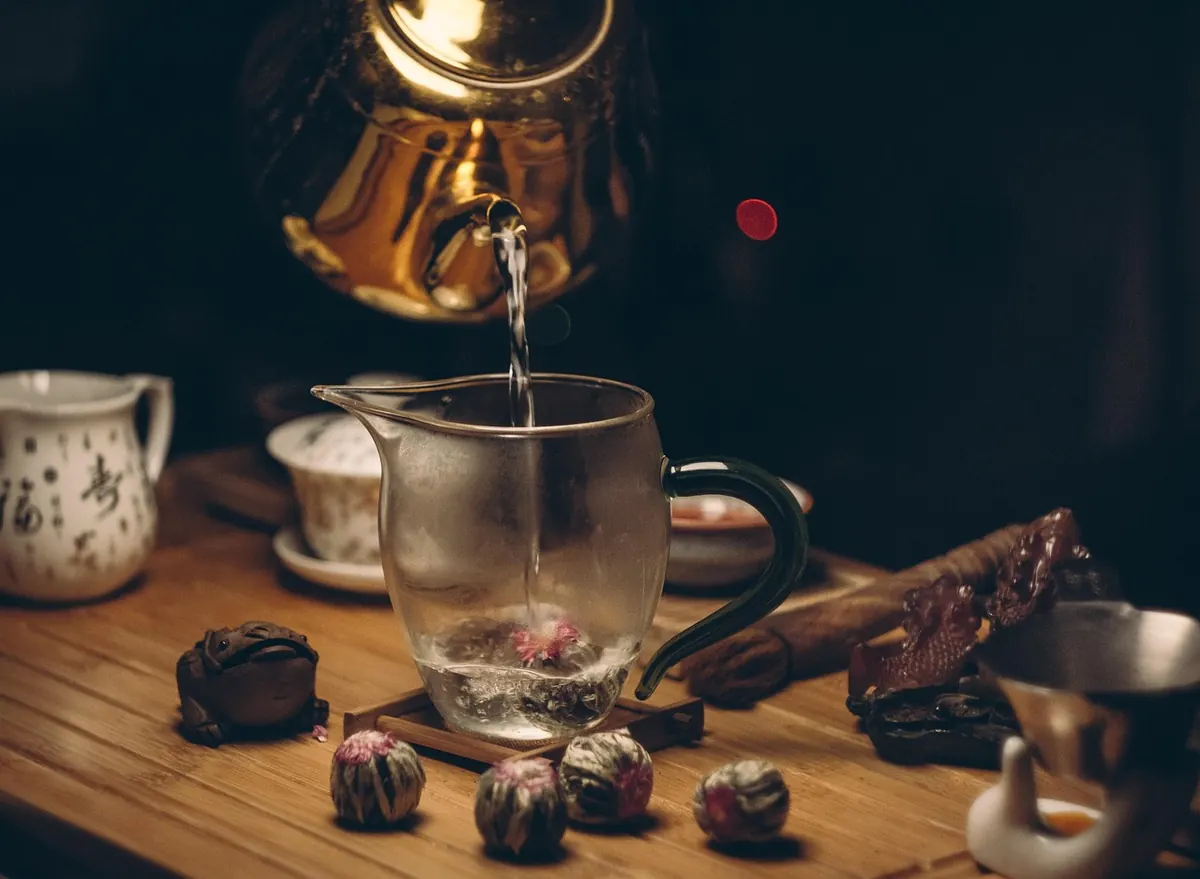
Glass is the only material that lets you watch the tea itself. You see jasmine pearls unfurl, a flowering tea bloom, the amber of an aged oolong deepen with each steep. For anyone learning to brew, that visibility is genuinely useful: you can catch a brew going dark before it turns bitter, and you can see when leaves have given everything they have.
The trade-off is honesty. Sediment, floating leaf fragments and a tannin film on the wall are all on display. Some drinkers love that; others find it untidy at a table set for guests.
The case for porcelain
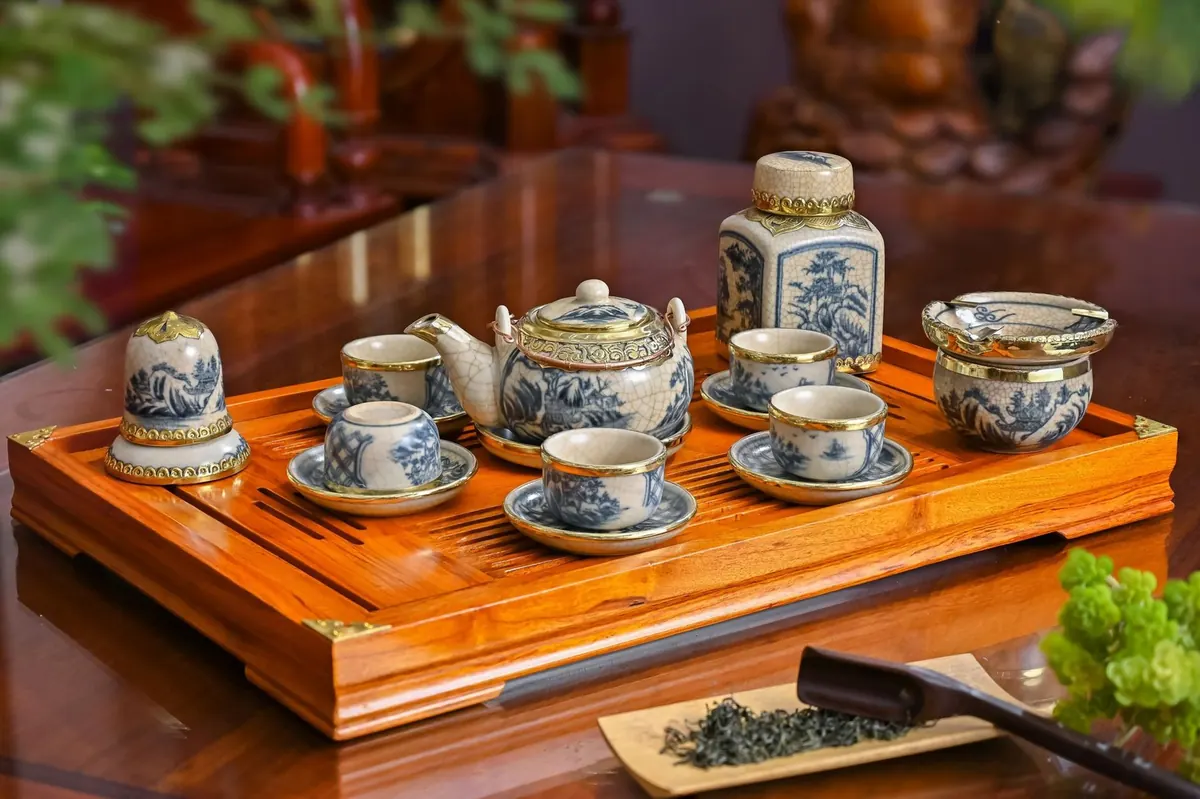
Porcelain hides the leaf and frames the liquor. A white interior is the best background for judging colour, which is why professional cuppers use white porcelain. Decoration is part of the pleasure too: cobalt blue and white, celadon glaze, hand-painted florals, a gilded rim. A porcelain set carries an occasion in a way glass rarely does.
A glass set asks you to watch the tea. A porcelain set asks you to watch the table.
Durability: Which One Survives a Real Kitchen
Both materials chip. Glass tends to fail more dramatically: a knock on the rim leaves a chip, and that chip becomes a crack the next time hot water hits it. Porcelain chips too, especially at spouts, rims and handles, but a chip in a thick porcelain body often stays a chip.
Where porcelain wins is thinness. A good porcelain cup can have walls barely 2mm thick and still feel sturdy, because the fired body is strong for its weight. Glass needs more thickness for the same strength, which is why glass cups usually have a chunkier rim.
Care habits matter more than the material:
- Warm a cold vessel gradually rather than pouring boiling water straight into it.
- Wash by hand when you can, using a soft sponge and warm water.
- Skip the dishwasher for anything with gold trim, metallic decoration or hand-painted detail.
- Store cups upright with a little space between them; nesting them tightly invites chips.
- Avoid antique lead crystal for hot tea. Lead can leach into acidic, hot liquids, and there are plenty of modern alternatives.
Cleaning and Long-Term Care
Properly fired porcelain glaze and modern glass are both non-porous, so neither should hold yesterday's flavour. Porcelain is the easier keeper of the two: a rinse and a wipe usually does it, and the glaze is tough enough to withstand years of daily use.
Glass has one disadvantage that has nothing to do with hygiene: you can see every mark. Tea leaves a faint brown film on both materials, but only one of them announces it. For everyday glassware, a paste of baking soda and warm water lifted with a soft cloth removes tannin film without scratching. For mineral scale, a soak in warm water with a spoonful of citric acid, then a rinse, works well and leaves no smell.
Never use abrasive powders or steel wool on either surface. They scratch glass permanently and dull glaze, and scratched surfaces hold onto stains far more stubbornly than smooth ones.
Everyday Brewing vs. Formal Service
For daily drinking, glass has real advantages. It's usually cheaper to replace a broken cup than a matching piece from a service, it's easy to see when it's clean, and it handles the quick, informal brews most of us make on a weekday. A double-walled glass mug and a simple borosilicate pot cover morning greens, herbals and cold brews without fuss.
For formal service, porcelain earns its keep. It holds heat through a slow conversation, its opaque body hides the mechanics of brewing, and a matched set — pot, cups, saucer, creamer, sugar bowl — reads as intentional rather than improvised. If guests will be lingering over a second and third cup of black tea, porcelain keeps the table warmer and the tea better.
A useful rule: glass for light teas you want to watch and drink young; porcelain for teas you want to keep hot and serve with ceremony.
A Simple Way to Decide
If you brew mostly green, white or floral teas and drink them within a few minutes, buy glass. Choose borosilicate or double-walled, and preheat the pot before every session. If you drink black, roasted oolong or pu-erh, serve guests often, or simply like the look of a proper tea table, buy porcelain. Start with a four-cup pot and two cups; add pieces as you find ones you love rather than buying a large set at once.
And if the answer is both — which it often is — keep a modest glass pot for daily brewing and one good porcelain set for the days when tea is the point of the afternoon. Two small, well-chosen sets will serve you better than one large compromise.
Photo: Pexels / Pixabay
You Might Also Like
Rotate teapots, trays, linens, and flowers four times a year to keep a small home tea corner fresh, usable, and quietly seasonal.
Match a teapot to a tea lover's habits, space and taste with this practical guide to sizes, materials, styles and the small details that make a gift usable.