Teapots as Gifts: How to Choose One for a Tea Lover's Style and Space
A teapot is a gift that gets used on ordinary mornings, not just birthdays. That is the appeal, and also the risk. Choose well and the recipient thinks of you every time the kettle boils; choose a tall porcelain showpiece for someone who drinks tea at a desk, and it becomes a shelf ornament they feel slightly guilty about.
Getting it right is mostly observation: how they brew, how many cups they pour, and where the pot would actually live. The order below matters more than the budget. A modest pot that fits the routine beats an expensive one that does not, every time — and the person on the receiving end usually works that out within a week.
One more thing before the details. A teapot is a working object, so the questions worth asking are practical ones: does it pour cleanly, does it hold enough, will they reach for it on a Tuesday? Gift it as equipment rather than decoration and you are already most of the way there.
Begin With How They Brew
Before you look at a single glaze, settle the volume. Most teapot disappointment comes from a mismatch between capacity and the way someone makes tea.
- One person, one cup at a time. 300–500 ml fills one large mug or two small cups.
- Two people, most days. 600–900 ml is the sweet spot for a shared morning pot, and a size most kitchens can store without fuss.
- Three or more, or regular guests. A litre and up, with a handle you would trust when the pot is full.
- Small and precise. 150–250 ml for someone who brews in short, repeated steeps rather than one long soak.
Then consider the tea. Loose-leaf drinkers need a filter in the spout or a removable infuser basket, since fine leaves clog a wide-open spout and turn every pour into a stop-start affair. Bag drinkers do not need a filter at all and may prefer a wider mouth that is easy to rinse.
Method matters as much as leaf. Someone who brews gongfu style — small volumes, many short steeps, tea decanted into a pitcher — will get far more from a compact clay pot than from a litre of stoneware. A Japanese kyusu, with its side handle and fine mesh screen, suits the same kind of drinker. Meanwhile, a household that fills one big pot at breakfast and lets it sit for an hour wants insulation and volume, not precision. Ask how they make their tea and the size answers itself.
Match the Style to the Person
Style is the part people agonise over, and it gets easier once you stop thinking about your own taste. A useful trick: picture the recipient's kitchen and ask which object there your teapot would sit next to. If their shelves hold plain oak boards and white mugs, a gilded floral pot will look like a guest who never leaves.
The minimalist
Clean lines, one material, no pattern. Matte stoneware in off-white, charcoal or clay, or a plain glass brewer. They will not want gold trim. Look for a pot whose shape carries the interest — a tapered body, a long spout — rather than a decorative surface.
The traditionalist
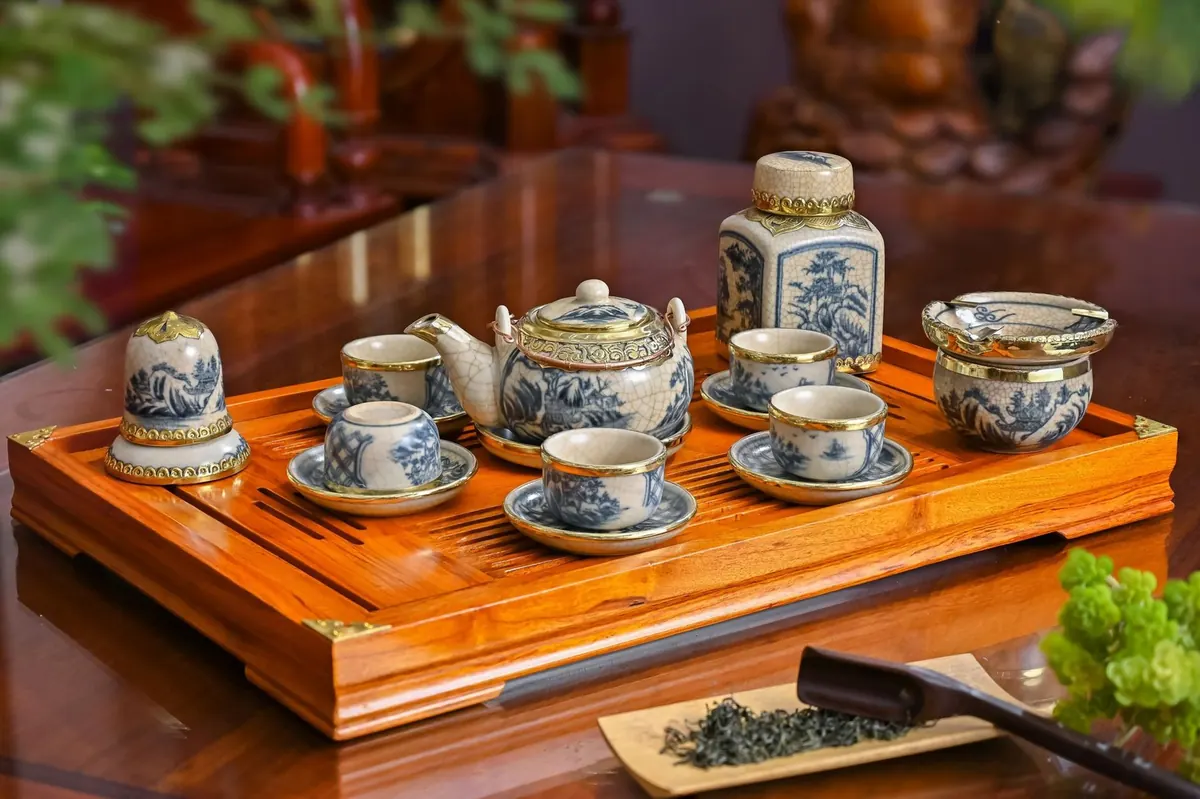
Classic shapes, muted patterns, a bit of history: blue-and-white porcelain, a brown clay pot, cast iron in a dark finish. They will notice whether the lid seats properly. Choose something that echoes a pattern or shape they already love rather than reinventing the shelf.
The collector
Someone who owns six teapots is not short of teapots, they are short of interesting ones. Look for a maker's mark, an unusual glaze, or a shape they do not already have. A short note from the potter usually matters more to this person than the price tag.
The host
The pot has to work through a long dinner conversation: good heat retention, a handle that stays cool, a design that looks deliberate on an open shelf. Capacity matters here too — a pot that runs dry halfway through dessert is worse than no pot at all.
Materials, and What Each One Does Well
- Glazed porcelain and ceramic. Neutral in flavour and easy to clean, which makes it the safest choice for someone who drinks many kinds of tea. Check the maker's note before assuming it is dishwasher safe.
- Unglazed clay, such as Yixing. Porous, so it gradually takes on the tea brewed in it. Dedicate it to one family of tea and rinse it with hot water rather than soap.
- Cast iron. Heavy, handsome, slow to cool, and good for a second and third cup. Most are lined inside and meant for brewing rather than the stovetop, so follow the maker's instructions and dry the rim well after use.
- Glass. The best choice for watching leaves unfurl. It loses heat quickly, so it suits short, repeated brews.
- Stoneware. Sturdy, warm in the hand, and forgiving of daily use.
Fit the Kitchen, Not Just the Person
A teapot lives somewhere. On open shelving it becomes part of the room's colours: matte black with warm wood, glossy white with pale blue, unglazed clay against almost anything. Inside a cupboard, buy for the hand instead: light enough to lift when full, with a lid that does not wobble.
Two checks matter more than looks. Tip the empty pot forward over a sink and watch the spout; a good one pours in a clean stream and stops when you set it upright. Then fill it and hold it the way the recipient would. Cast iron full of tea is a heavy object, and a handle a centimetre too small turns a daily pleasure into a chore.
Storage deserves a thought too. Tall pots need shelf height; wide ones eat counter space. If the recipient rents, moves often, or cooks in a small kitchen, a compact 600 ml pot will be reached for far more often than a two-litre showpiece — and the gift will feel considered rather than aspirational.
What the Money Actually Buys
Price is a poor guide on its own, because the differences that matter are mostly mechanical. Past a modest point you are paying for the pour, the lid fit, the evenness of the glaze and the maker's time — not for volume or gold paint.
- Entry level. Perfectly good everyday pots, often with a metal infuser basket. Watch for thin walls that cool quickly and lid rims that chip.
- Mid range. Better clay bodies, tighter lids, a spout shaped by hand rather than by mould. This is where most good gifts live.
- Higher end. Studio pottery and named makers, where the mark matters and no two pots are quite the same.
If the budget is tight, a small, well-made pot in a plain glaze will please more than a large, ornate one that dribbles.
Useful Additions to Send With It
A teapot alone is a fine gift. A teapot with two or three small companions is a considered one, and the extras cost very little:
- A tin of tea that suits the pot — oolong for an unglazed clay pot, a bright black for a porcelain one.
- A small strainer, if the pot has no filter in the spout.
- A short care note in your own words: hot water rinse, no soap, dry the rim.
- Two matching cups, if you know they will be pouring for someone else.
Skip anything that needs explaining. A gift that arrives with an instruction sheet longer than a page is a gift that stays in the box.
A Short Checklist Before You Buy
- How much tea do they make at once, and for how many people?
- Loose leaf or bags — does the pot need a filter?
- Which material suits their tea, and their washing-up habits?
- Where will it live: shelf, cupboard, or counter?
- Can they lift it comfortably when it is full?
- Does it pour cleanly, and does the lid stay put?
- Would it look at home among their other things?
Get those seven right and the pot will still be in use long after the wrapping paper is gone. That is the whole aim: not a beautiful object, but a beautiful habit — one they reach for without thinking, on an ordinary morning, because you happened to notice how they take their tea.
Photo: rawpixel / Pixabay

You Might Also Like
Rotate teapots, trays, linens, and flowers four times a year to keep a small home tea corner fresh, usable, and quietly seasonal.
A practical guide to hosting afternoon tea at home: choosing the right teapot, arranging a working tea set, and timing the brew and the food.