How to Clean and Season a Cast Iron Teapot Without Ruining the Interior
A cast iron teapot earns its keep slowly. It holds heat, it pours with satisfying weight, and it looks good enough to leave on the counter. Then someone hands you a sponge and you freeze: soap, or no soap? The honest answer depends on one thing, and it isn't the outside of the pot. It's what's lining the inside.
Identify the Interior Before You Touch It
Hold the pot under a bright light and look inside. You'll find one of two things, and they need different care.
- Enamel lining. Glossy, smooth, glass-like — black, cream, or white. This is what most cast iron teapots sold today have. It's non-reactive, doesn't rust, and doesn't need seasoning of any kind.
- Unlined or seasoned cast iron. Dark, matte, faintly grainy, often with a thin grey-white film of minerals. Older tetsubin and some traditional pots are like this. The surface improves with use, and water is the only thing that should ever touch it.
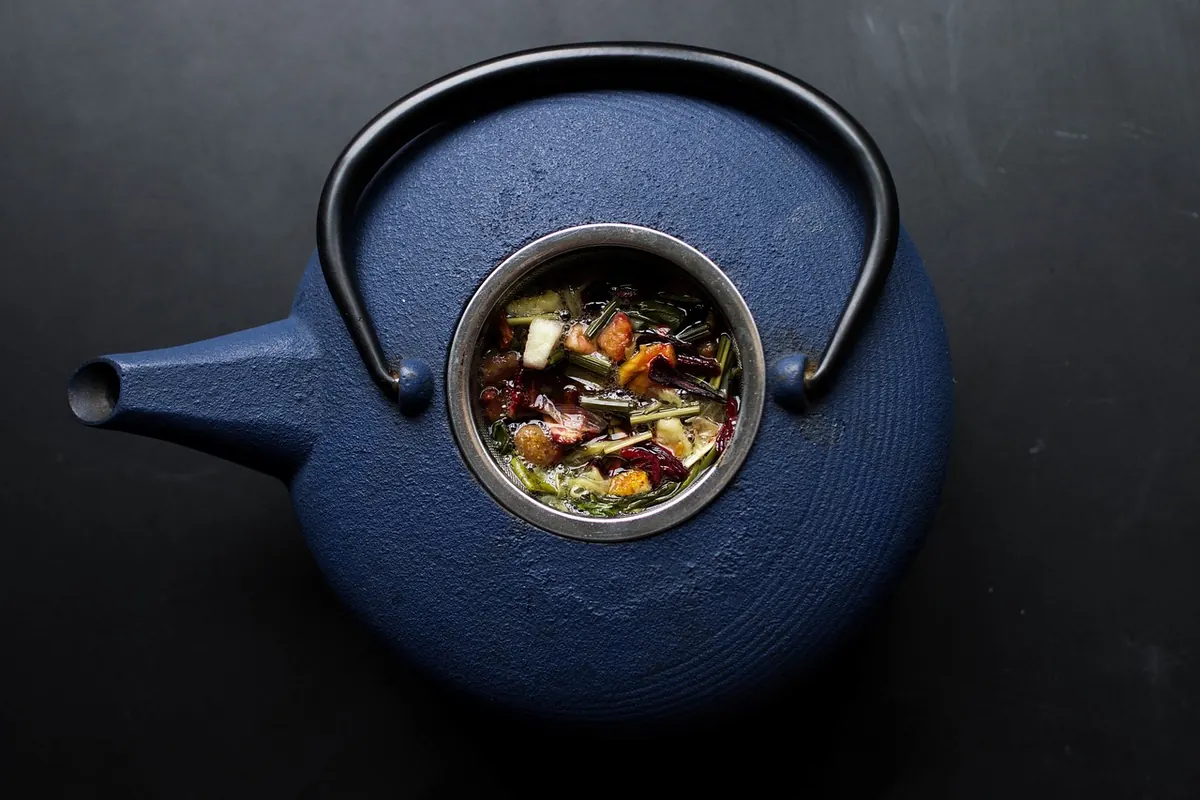
While you're inspecting, check the maker's note about heat. Many enamel-lined teapots are designed for brewing only — you boil water in a separate kettle and pour it in. Putting one on a burner, especially empty or over high heat, can crack the enamel or scorch the exterior finish. If the pot came with a stainless infuser basket, that comes out for cleaning; it isn't part of the pot.
The Two-Minute Routine That Prevents Most Problems
Almost every sad cast iron teapot got that way from neglect, not from a single mistake. Do this after each session and you'll rarely need anything more.
- Empty the leaves and the infuser while the pot is still warm, not hours later.
- Rinse the inside with hot water. Hot, not boiling, and no soap unless the interior is enamel and genuinely needs it.
- Wipe the inside with a soft cloth. Don't scrape at the walls.
- Dry the outside with a towel, including the spout, the rim, and the underside of the lid.
- Set the pot somewhere airy with the lid off or resting askew until it's completely dry, then put the lid back on.
That last step matters more than it sounds. Tea left sitting overnight is the most common cause of dull linings and lingering odors.
Cleaning an Enamel Lining
Enamel is tough but not invincible. It tolerates warm water, a drop of mild dish soap, and a soft sponge. It does not tolerate abrasive powders, steel wool, scouring pads, or a metal spoon scraped around the bottom.
For the brown tea stains that build up over months, make a paste of baking soda and a little water, rub it on with your fingertip or a soft cloth, let it sit a few minutes, then rinse well. For stubborn patches, a gentle pass with a non-scratch nylon brush works. Skip vinegar and other strong acids — they can etch or dull the finish, and tea residue rarely calls for them.
Never put the pot in a dishwasher. The heat, the detergent, and the jostling are all hard on enamel and on whatever finish covers the exterior. Wash it by hand, or don't wash it at all.
Cleaning and Seasoning an Unlined Interior
Here the rules invert: no soap, no scrubbing, no acid. That pale film inside an old tetsubin is mineral scale from years of boiled water, and it's a feature, not dirt. It rounds off the taste of the water and shields the iron underneath.
Rinse with hot water and wipe. If flakes of scale come loose, that's normal — boil a pot of fresh water, pour it out, and let the surface dry. You're not trying to get back to bare metal.
Re-seasoning a dry or freshly scrubbed interior
If the inside has gone pale and chalky, or you've had to remove a rust spot, rebuild the layer:
- Fill the pot with fresh water and bring it to a gentle simmer, or pour in just-boiled water and let it stand.
- Add a spoonful of black or oolong tea leaves. Tannins darken and seal the iron, which is why this is the traditional fix.
- Let it steep or simmer for ten minutes, then pour everything out.
- Dry it thoroughly and repeat once or twice more. The surface should look even and dark, not orange or patchy.
For a small rust bloom, rub it lightly with a soft brush — only on an unlined interior, never near enamel — then re-season right away. Bare iron rusts again quickly.
Drying and Storing
Water is the enemy here, and it hides in places you don't think about: the seam where the spout meets the body, the groove around the rim, the hinge of the handle, the underside of the lid. Wipe all of them.
A little warmth helps. Setting the pot on a trivet near — not on — a warm stove for ten minutes drives off residual moisture. Don't put a wet pot in a closed cupboard, don't wrap it in plastic, and don't store it with the lid clamped down tight. Air circulation is what keeps the inside from smelling like a damp cellar.
Things That Cause Real Damage
- Dishwasher cycles, for any cast iron teapot.
- Steel wool, scouring powder, or metal utensils on enamel.
- Soap and heavy scrubbing on an unlined interior.
- Leaving tea — especially milky or heavily spiced blends — sitting for hours.
- Boiling the pot dry, or heating an enamel-lined pot on a burner when the maker says not to.
- Thermal shock: cold water into a hot pot, or hot water into a chilled one.
- Storing it damp and sealed.
- Dropping the lid. It's the most fragile part, and replacements are hard to find.
Make It a Habit, Not a Project
Cast iron rewards a small, boring routine. Empty it, rinse it hot, dry every crevice, leave the lid off for an hour. Do that and an enamel lining stays glossy for years, while an unlined interior quietly gets better — darker, smoother, and easier to pour from. The pot stops being something you maintain and becomes the thing you reach for first on a slow morning.
Photo: the5th / Pixabay
You Might Also Like
Rotate teapots, trays, linens, and flowers four times a year to keep a small home tea corner fresh, usable, and quietly seasonal.
Match a teapot to a tea lover's habits, space and taste with this practical guide to sizes, materials, styles and the small details that make a gift usable.